
Google AI Overviews have changed what search visibility looks like.
For many informational searches, users no longer see a simple list of ten organic results. They may first see a generated answer that brings together information from several sources, provides supporting links and answers much of the original question before the user clicks anything.
That creates a new commercial challenge.
The answer to how to rank in Google AI Overviews is not to chase a fixed “AI position”. There is no permanent number-one slot inside an AI-generated result.
The objective is to make your pages eligible, relevant, distinctive and trustworthy enough to be selected as supporting sources across the different searches Google performs when creating an answer.
That still requires SEO. It simply requires SEO to do more than match a keyword.
What are Google AI Overviews?
Google AI Overviews are generated summaries that appear when Google believes an AI-produced response can add useful context beyond its traditional search results.
They are designed to help users understand a topic, work through a complex question or explore several connected parts of a problem. Depending on the query, the response can include supporting links, images, products and other search features.
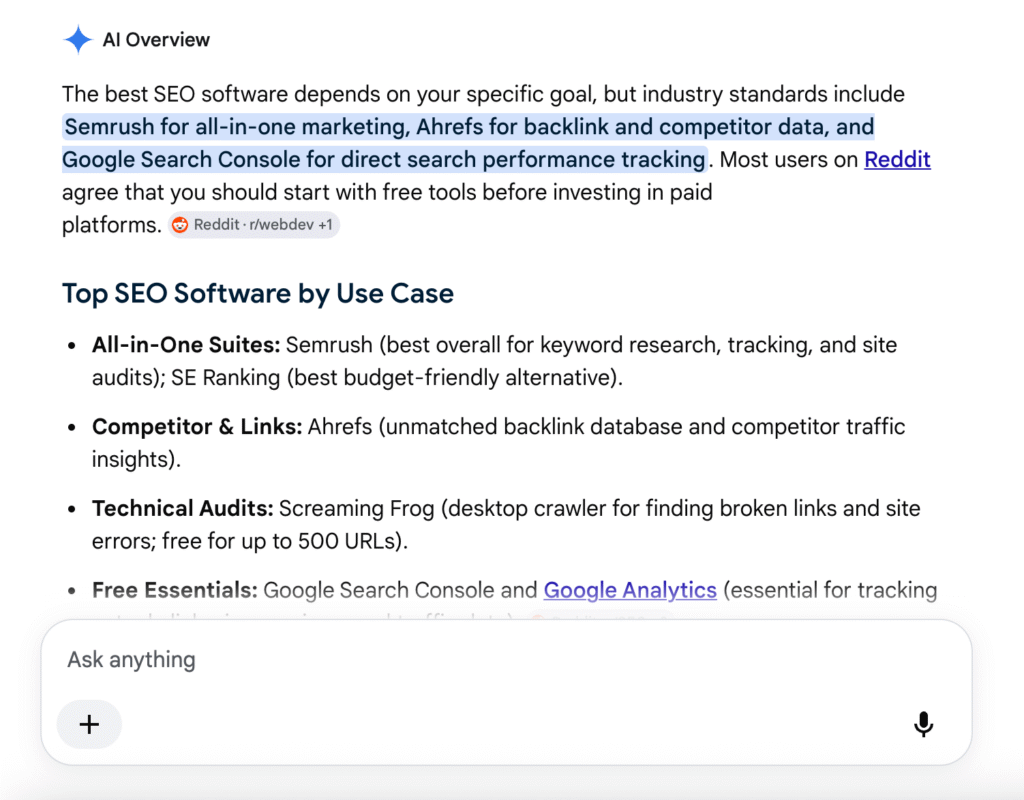
Google states that AI Overviews and AI Mode are rooted in its existing Search ranking and quality systems. A page still needs to be indexed and eligible to appear in Google Search with a snippet before it can be considered as a supporting link.
There is no separate submission process.
There is also no special “AI Overview schema”.
That is the foundation of Google AI Overview SEO.
You are not optimising for an entirely separate search engine. You are strengthening the technical, content and authority signals Google already uses while recognising that generative results can retrieve, combine and present that information differently.
What does “ranking” in an AI Overview mean?
Traditional SEO gives us a relatively simple idea of ranking. A page appears in position one, two or three for a query at a particular moment.
AI Overviews are less predictable.
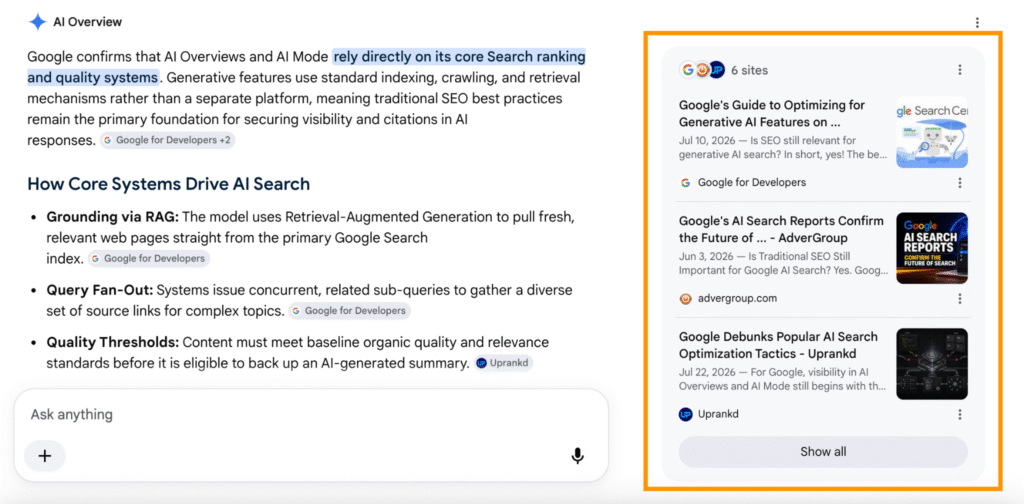
Your website might be cited as the source for one statement, appear among the supporting links, provide an image or surface for a related query generated during Google’s retrieval process.
It may also appear for one variation of a search but not another, or show in AI Mode without being present in the AI Overview for what appears to be the same question. Location, device and the exact wording of the search can also affect what appears.
Google confirms that AI Overviews and AI Mode may use different models and techniques, so their responses and supporting links can vary.
Both can also use query fan-out.
This is where Google expands an original search into related searches so it can collect information across different aspects of the problem.
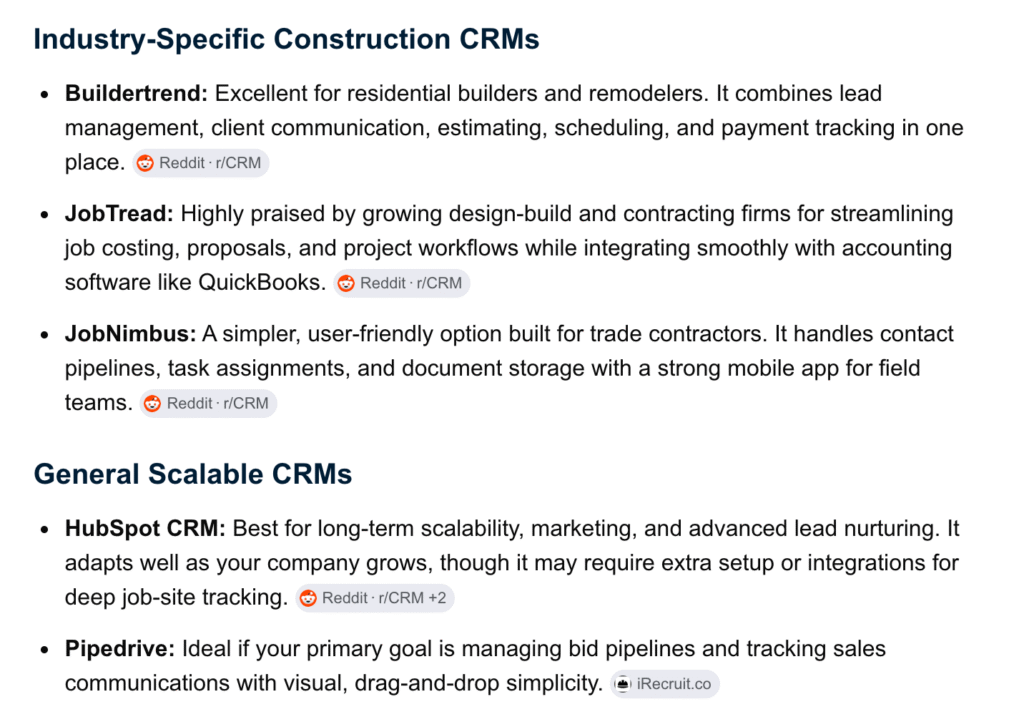
Someone searching for:
What is the best CRM for a growing construction company?
may trigger related retrieval around construction CRM features, pricing for smaller teams, mobile access for field workers, integrations, implementation time and reviews of specific platforms.
A single webpage therefore does not necessarily need to rank first for the exact original wording to contribute useful information.
That is one reason there is no simple list of universal AI Overview ranking factors.
Selection can depend on the claim Google is trying to support, the related search it performs, how distinctive the source is and whether its systems can access and interpret the page confidently.
AI Overviews are changing click behaviour
Visibility inside an AI response matters partly because AI-generated answers can reduce the need to click.
Visibility inside an AI result matters partly because generated answers can reduce the need to click.
Pew Research Center analysed 68,879 Google searches made by 900 US adults in March 2025. Approximately 18% of those searches generated an AI summary. Users clicked a traditional search result in 8% of visits where an AI summary appeared, compared with 15% where one did not.
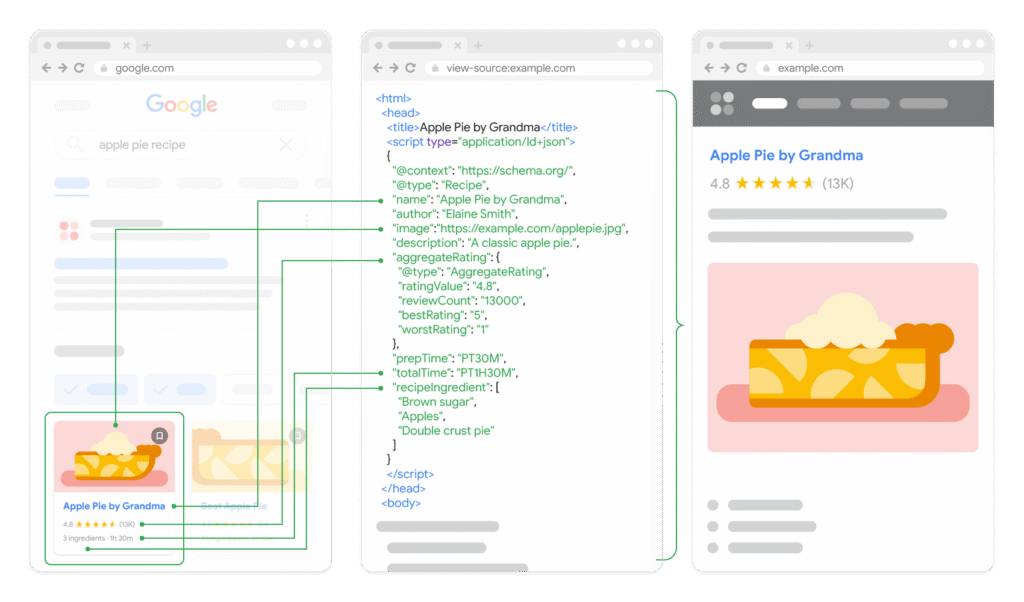
Image Source: Pew Research Center
CClicks on links inside the AI summary itself also occurred in only 1% of visits. Users also ended their browsing session after 26% of searches with an AI summary, compared with 16% of searches without one.
Those figures should not be treated as a universal traffic forecast.
The research covered a defined US sample over a particular period. Transactional, commercial, navigational and local searches can behave differently.
It does, however, demonstrate why rankings alone are no longer enough.
A business now needs to consider whether it is named or cited in generated answers, whether Google describes the company accurately, whether its content appears during commercially important stages of the customer journey and, ultimately, whether that visibility turns into useful enquiries or revenue.
Brand visibility also has value in searches where the user never clicks.
Google has said that visitors arriving from search pages containing AI Overviews can be more engaged because the generated result gives them additional context before the visit.
That is Google’s own observation rather than an independent measurement, but it reinforces the need to assess visit quality rather than traffic alone.
How Google finds sources for AI Overviews
Two concepts are particularly useful when understanding how generative search finds information: retrieval-augmented generation and query fan-out.
1. Retrieval-augmented generation
Retrieval-augmented generation, often shortened to RAG, allows a generative system to retrieve current information from Google’s search index before producing an answer.
Rather than relying entirely on information contained inside a language model, Google can identify relevant webpages, inspect information on those pages and use it to ground its response.
This is why traditional technical SEO still matters. If a page cannot be crawled, indexed or shown with a search snippet, it cannot become a supporting source.
2. Query fan-out
Query fan-out expands one search into several connected searches.
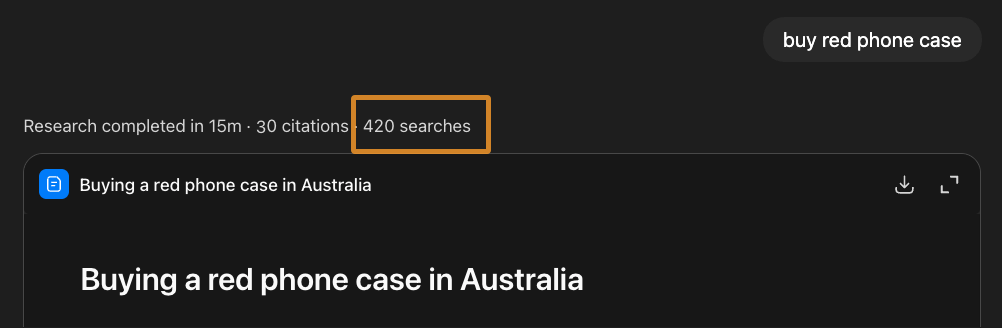
Image Source: Ahrefs
This helps Google answer complex questions that cannot be resolved through one webpage or one simple keyword. It may retrieve a definition from one source, practical advice from another, product data from a third and evidence from a primary study.
The implication is important:
- Do not create a page that repeats the same answer for one keyword.
- Create a resource that contributes useful evidence across the wider decision the user is trying to make.
Google’s official guidance confirms both retrieval-augmented generation and query fan-out as techniques used by its generative search features.
Identify queries where an AI Overview can add value
Not every search produces an AI Overview.
Generated responses are more useful for searches involving explanation, comparison, synthesis or several steps. A straightforward navigational search such as a company name or login page normally needs a direct result rather than a generated summary.
The Pew study found that AI summaries appeared for only 8% of searches containing one or two words, but for 53% of searches containing ten or more words. Searches written as full questions or sentences were also more likely to trigger a summary.
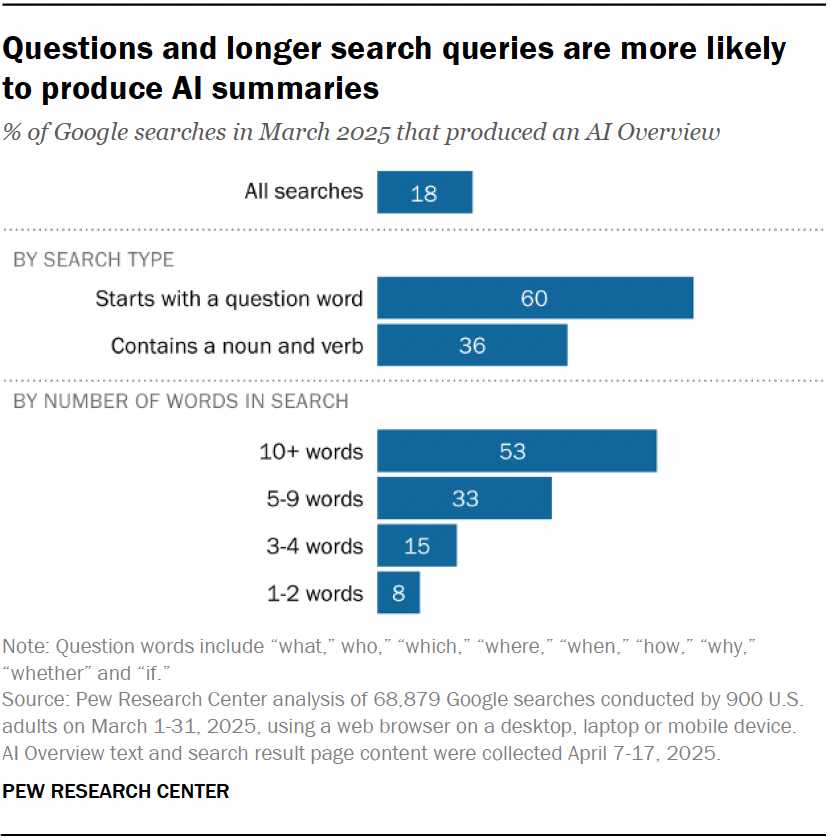
Image Source: Pew Research Center
That makes detailed customer questions valuable research material.
Look at what prospects actually ask during sales calls, consultations and customer-support conversations. Review People Also Ask results, cost questions, comparisons, “best for” searches and queries involving several conditions or requirements.
You can use Eclypseo’s Google Search Console regex guide to isolate existing searches containing terms such as how, why, what, which, can and should.
Do not automatically turn each question into a separate article.
Group related searches around the underlying task or decision.
A strong guide about choosing accounting software may be more useful than twenty thin pages targeting minor wording variations of the same question.
4. Answer the primary question clearly
A useful page should make its main answer easy to find.
That does not mean turning every paragraph into a 40-word “AI-friendly chunk”. Google explicitly states that content does not need to be divided into tiny sections for its generative systems to understand it, and there is no ideal page length.
Clarity still matters for people.
The introduction should answer the main question, explain any important qualification and tell the reader what the page will help them understand or do.
For example:
There is no guaranteed method for appearing in Google AI Overviews. A page must first be indexed and eligible for Google Search, then provide information Google considers relevant and useful for the original query or one of its related searches. Strong technical SEO, original evidence and clear subject expertise improve eligibility, but inclusion is never guaranteed.
That answer is direct without pretending the process is simple.
After the opening, give the reader the depth needed to act. That may include methodologies, examples, alternatives, risks, calculations, data or decision criteria.
5. Create non-commodity content
The internet does not need another page that combines the first five Google results into a slightly different article.
Google’s current generative-search guidance places significant emphasis on non-commodity content: information that brings a distinct viewpoint, direct experience or evidence that cannot be created simply by summarising what is already available elsewhere.
That could mean original research, internal performance data, case studies, expert interviews, first-hand tests, screenshots, product photographs, failure analysis, calculators or a clear specialist opinion supported by evidence.
The format matters less than whether the information adds something.
Compare these two examples.
Commodity:
Improve website speed by compressing images, using a CDN and reducing unnecessary scripts.
More useful:
We audited 42 lead-generation pages after a JavaScript deployment increased mobile loading time. Removing one third-party script reduced the median Largest Contentful Paint measurement from 4.1 to 2.6 seconds, but form completion did not materially improve until the mobile layout was simplified. Speed was part of the problem, not the entire conversion issue.
The second version gives Google and the reader something specific to understand, evaluate and potentially cite.
Eclypseo’s content marketing service is built around this distinction. The objective is not to publish more words.
It is to turn real expertise into content that supports visibility and commercial action.
6. Cover the decision, not every keyword variation
Query fan-out means one search can involve several related needs.
A useful page should cover the important subtopics required to complete the customer’s task without repeating the main keyword in every section or creating separate pages containing almost identical information.
A guide about commercial solar panels, for example, may need to cover installation cost, payback periods, roof suitability, maintenance, output estimates, regulation, provider selection and contractual risks.
Those topics are different, but they all contribute to one decision.
A simple topic map can help before writing:
Layer | Purpose | Example |
Core question | Defines the main task | Are commercial solar panels worth it? |
Decision criteria | Helps the reader choose | Cost, output, payback and maintenance |
Supporting evidence | Proves the claims | Calculations, case studies and official data |
Risk questions | Prevents poor decisions | Roof limits, warranties and contract terms |
Next step | Moves the user forward | Request a feasibility assessment |
This creates depth without unnecessary repetition.
Google also warns against generating separate pages for every potential fan-out query primarily to manipulate search rankings or AI responses.
More pages do not automatically create more authority.
7. Make important claims easy to verify
AI systems need reliable material to ground an answer.
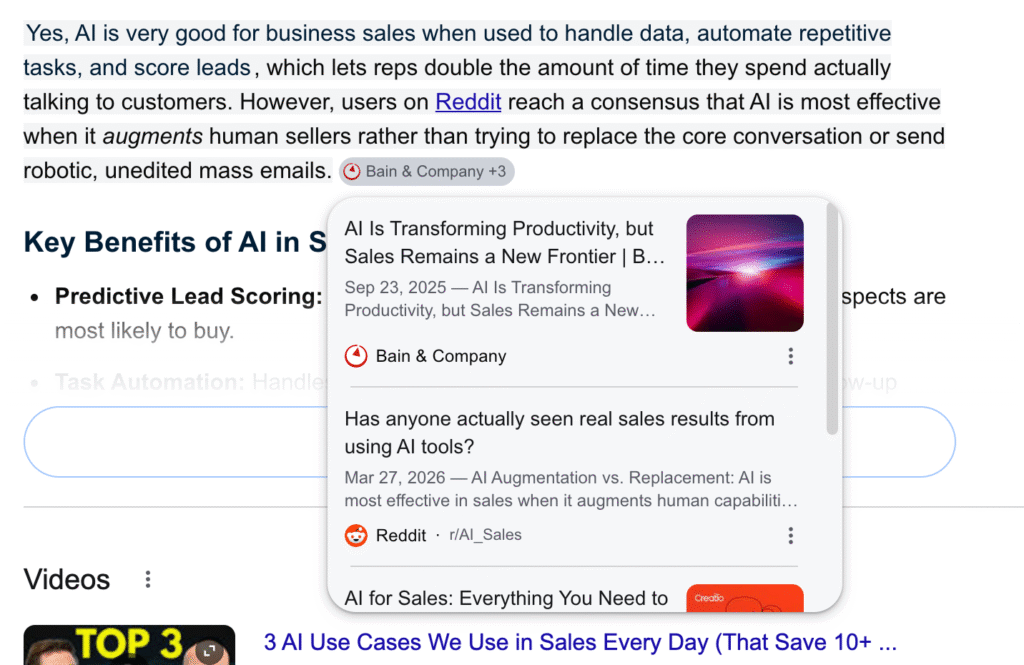
Your readers need the same thing before making a decision. Where possible, use the strongest available source. Official documentation and government data should usually take priority, followed by peer-reviewed research, original research with a transparent methodology and high-quality industry studies or editorial reporting.
Link to the original source rather than a blog summarising another blog. When using internal data, explain what was measured, the original baseline, timeframe, sample size, methodology and any important limitations.
A 2026 academic preprint measured 55,393 trending searches across 19 categories over a 40-day period.
It found AI Overviews in 13.7% of the total searches but in 64.7% of question-form searches. Nearly 30% of cited domains did not appear among the accompanying first-page organic results.
The researchers also reported that 11% of the individual claims they analysed were not supported by the cited webpages. Because the study is a preprint, its findings should not be treated as settled evidence.
They do, however, illustrate two useful points.
AI source selection can differ from traditional organic rankings, and appearing as a citation does not automatically guarantee that every generated claim perfectly reflects the source.
Businesses should therefore monitor not only whether they receive AI Overview citations, but whether Google represents their information correctly.
8. Strengthen technical eligibility
Before attempting advanced AI Overview optimisation, confirm that Google can access the page.
The underlying requirements remain familiar.
Googlebot needs to be able to crawl the URL. The server should return a successful response, the content must be indexable, the URL must be indexed and the page must remain eligible to appear with a snippet.
There are no additional technical requirements created specifically for AI Overviews.
In practice, that means reviewing robots directives, noindex tags, canonicals, server responses, JavaScript rendering, duplicate pages, internal links, XML sitemaps and crawl depth.
Snippet controls deserve particular attention.
Google confirms that restrictive nosnippet, data-nosnippet and max-snippet settings can limit how content appears in its AI experiences.
A technical SEO service reviews these foundations across crawling, indexation, JavaScript, canonicals, schema, internal linking and site architecture. For a deeper diagnosis, the indexation and crawl-budget guide explains why Google may ignore pages even when they are technically live.
9. Build strong internal relationships
A strong article should not sit alone in a blog folder.
Google needs to discover the page and understand how it relates to the rest of the site. Internal links help by creating crawl paths, connecting related topics and signalling which pages are important.
They also help users continue their research.
A new guide may deserve links from relevant service pages, established articles, category pages, case studies or resource hubs where those connections genuinely make sense.
Anchor text should describe the destination clearly.
“Learn more” offers very little context.
“Compare CRM implementation costs” tells both the user and the search engine what to expect.
A topic cluster should not exist simply because it looks impressive in an SEO presentation. Every supporting page should answer a distinct customer need.
10. Use structured data correctly
Structured data can help search engines understand information about articles, organisations, products, authors, reviews and local businesses.
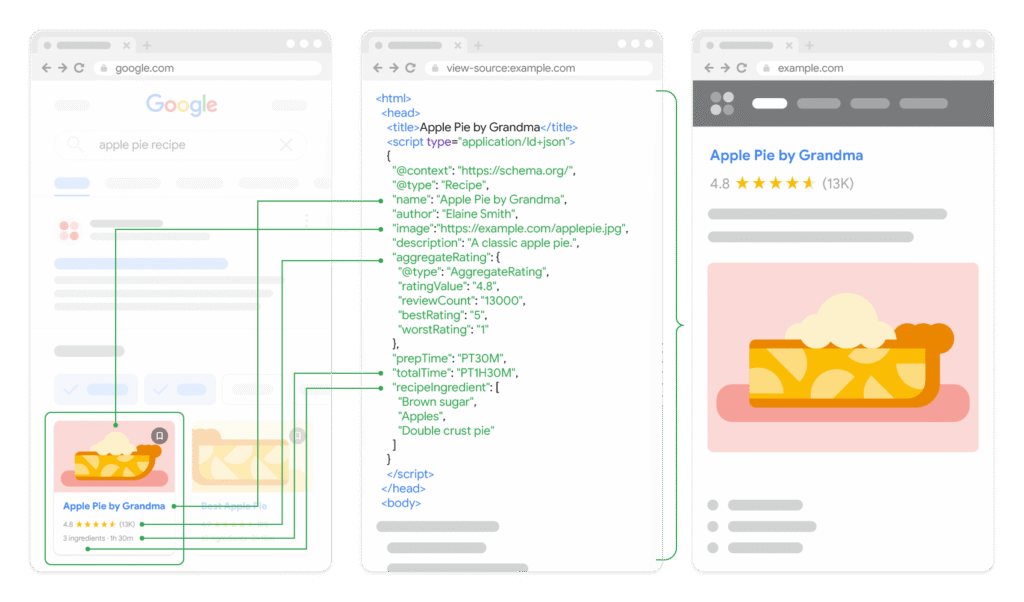
Image Source: Google
It can also make eligible pages available for certain rich-result formats. But it should not be treated as a shortcut into generative search.
There is no special AI Overview schema. Structured data is not required for inclusion, and adding markup does not guarantee a citation. The markup should also match what the user can actually see on the page.
Do not add FAQ markup for questions that are not present. Do not mark an article as reviewed by an expert who never reviewed it. Do not add unsupported review information because it looks useful in a schema generator.
Google specifically warns against overfocusing on structured data as an AI-search tactic.
It remains useful as part of wider SEO.
It cannot replace strong content or reliable technical access.
11. Strengthen the entity behind the content
Google can retrieve information from different webpages and independent sources when creating a generated answer.
That means your website is only one part of the picture.
The company’s name, services, location, contact information, leadership and areas of expertise should be described consistently across its own site and relevant third-party sources.
That may include a Google Business Profile, legitimate professional directories, industry publications, review platforms, social profiles, interviews, partners and author biographies.
Consistency does not mean copying the same promotional description onto hundreds of low-quality directories. Google’s guidance discourages chasing inauthentic mentions.
A more useful strategy is to build authority through work that deserves independent reference: publish original data, contribute expert commentary, participate in relevant communities, earn detailed customer reviews, speak at industry events, create useful tools and build genuine partnerships.
Eclypseo’s guide to getting featured on AI search engines explains how technical access, entity clarity, strong content and independent authority work together across AI platforms
12. Support text with useful images and video
AI search is not limited to text.
Google can use images, video, product information and local-business data within generative search experiences.
Useful visual assets could include original diagrams, annotated screenshots, product demonstrations, comparison charts, expert interviews, process videos and before-and-after photographs.
The important word is useful.
Decorative stock imagery rarely adds much information.
A technical guide may benefit from a screenshot showing the actual process. A product page may need high-quality photographs demonstrating details the written description cannot communicate as efficiently. A complicated workflow may be easier to understand through a short video.
Optimisation still matters.
Use descriptive filenames, relevant alternative text, useful captions and written context around important visual assets. Video pages should remain crawlable and their URLs stable.
For ecommerce businesses, accurate Merchant Center feeds also matter.
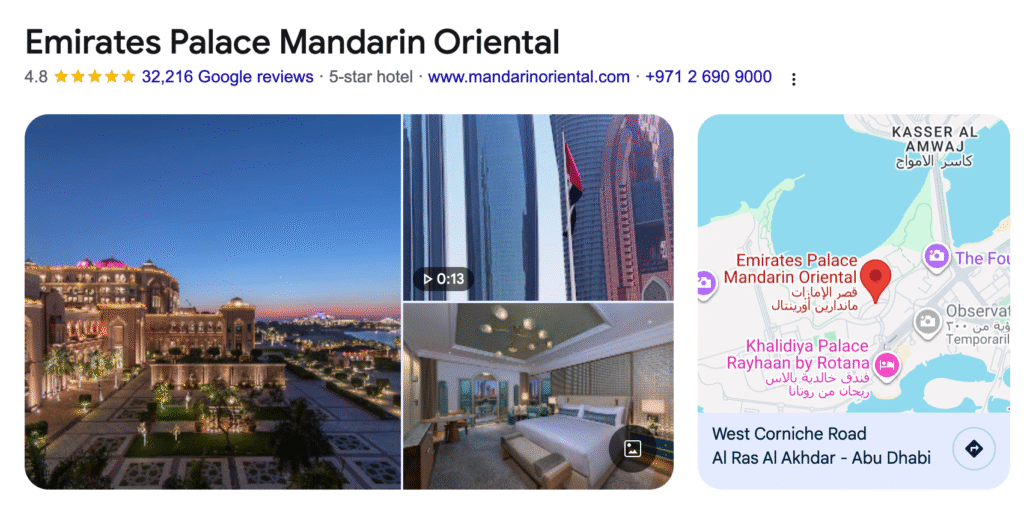
For local companies, the Google Business Profile should contain current services, photographs, opening hours and contact information. Google specifically identifies both platforms as potential sources for product and local information in its generative experiences.
13. Refresh content when the evidence changes
A page can remain well written and still become less useful over time.
Official guidance changes. Prices move. New studies are published. Products evolve. Regulations are updated. Search intent can shift, and competing pages may eventually provide stronger evidence.
High-value content should therefore be reviewed when the subject changes. A meaningful refresh is more than changing “2025” to “2026” in the title.
It may involve rechecking sources, replacing outdated figures, adding a more recent example, clarifying limitations, improving internal links, adding an original visual or removing a claim that can no longer be supported.
Freshness should reflect genuine maintenance. Changing the publication date without improving the page does not make the information more useful.
14. Measure Google AI search visibility properly
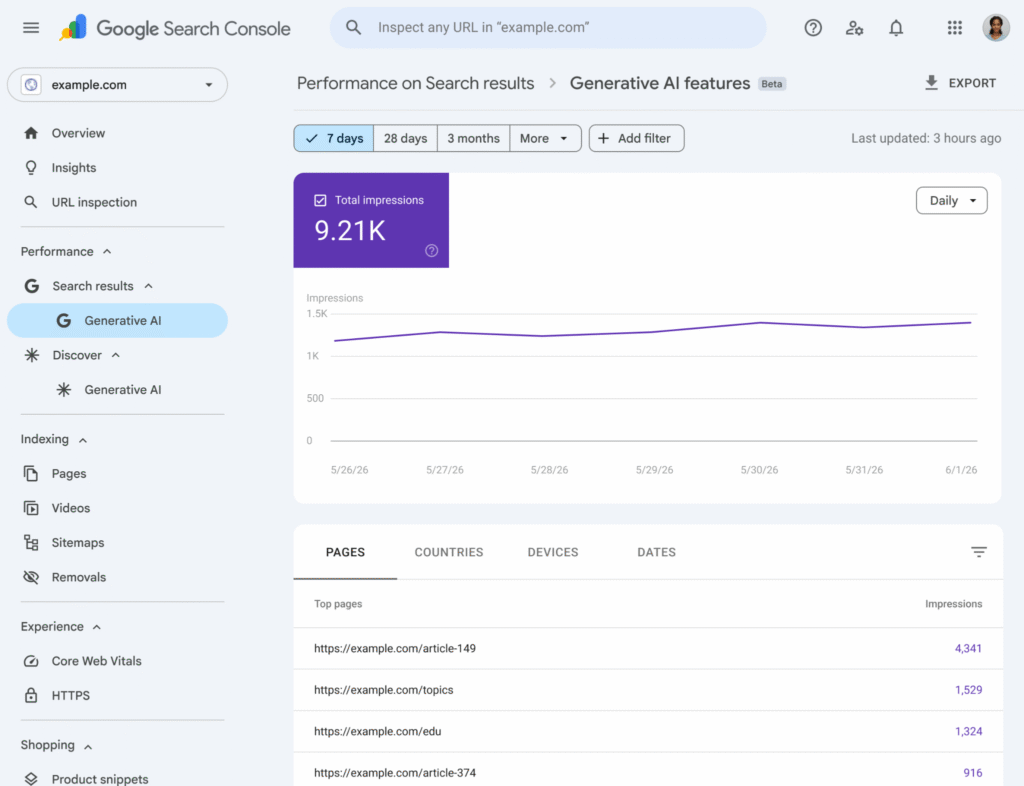
Until recently, AI Overview performance was incorporated into Google Search Console’s general Web reporting.
Image Source: Google
On June 3, 2026, Google announced dedicated Generative AI performance reporting for Search and Discover.
The Search report can show impressions, pages, countries, devices and performance over time for appearances in generative features such as AI Overviews and AI Mode.
At launch, Google said the reports were being rolled out to a subset of websites rather than becoming available to everyone immediately. Where those reports are available, monitor which pages receive generative visibility, how performance changes over time and whether particular countries or devices behave differently.
Then connect that data to the rest of the commercial journey. Use Search Console, Analytics, CRM data, call tracking and conversion tracking to understand what those visitors actually do.
Manual prompt testing and branded-search monitoring can also help identify how the company is represented.
Do not measure success through citations alone.
A citation attached to a low-value informational query may deliver very little commercial benefit. A supporting link appearing while a buyer compares expensive products or services may be considerably more valuable.
The real question is whether Google AI search visibility contributes to enquiries, sales, assisted conversions, demo requests, calls, newsletter sign-ups or stronger branded demand.
A practical AI Overview readiness audit
The following framework is not a Google score. It is simply a way to prioritise pages based on technical eligibility, usefulness, authority and commercial value.
Area | 0 | 1 | 2 | 3 |
Technical access | Blocked or not indexed | Indexation uncertain | Indexed with minor issues | Fully accessible and monitored |
Search intent | Does not answer the query | Partially relevant | Covers the core question | Resolves the wider decision |
Originality | Generic summary | Limited original input | Useful examples | Original evidence or methodology |
Authority | No supporting evidence | Mostly self-claimed | Credible sources included | Strong internal and external proof |
Structure | Difficult to navigate | Basic headings | Clear sections | Clear answer with useful depth |
Entity clarity | Business is ambiguous | Some inconsistent details | Mostly consistent | Clear and independently supported |
Commercial value | No meaningful next step | Generic CTA | Relevant next step | Measurable conversion journey |
Start with pages that combine meaningful commercial value with realistic improvement potential.
A page that already receives impressions, sits close to strong organic visibility, contains genuine expertise and supports an important product or service is usually a better optimisation candidate than a page nobody searches for.
You cannot guarantee an AI Overview citation
Any agency promising a guaranteed position inside Google AI Overviews is selling certainty that does not exist.
Google decides whether an AI Overview appears, which related searches it performs, which sources it retrieves, which links it shows and how the response changes between users and searches.
You cannot control those decisions directly. But, you can control whether the website is accessible, useful, distinctive, well supported and commercially relevant.
That is how to appear in Google AI Overviews more consistently.
The strongest approach remains a combination of technically reliable SEO, clear answers, original expertise, strong evidence, credible authority, consistent business information and useful visual content.
The goal is not to win an AI citation for presentation’s sake. It is to remain visible while customers research, compare and make decisions, and to turn that visibility into business growth.
For a practical assessment of the technical, content and authority gaps limiting your visibility, contact Eclypseo to discuss an AI and LLM optimisation strategy connected to rankings, qualified leads and revenue.