
Healthcare search is changing fast. For years, Dubai clinics relied on familiar SEO tactics:
- local keyword targeting
- service page optimisation
- Google Business Profile management
- backlinks from reputable websites
These still matter. But patients now research healthcare differently. Before visiting a clinic website, they may already be using AI-powered search to:
- compare treatment options
- check practitioner credibility
- read reviews
- understand risks, costs and recovery timelines
- shortlist clinics or specialists
For healthcare providers, this shift matters. Medical content is held to higher trust standards, and Dubai clinics operate in highly competitive sectors such as fertility treatment, cosmetic dermatology, dental implants, orthodontics, LASIK and hair restoration.
SEO has moved beyond keyword rankings. Today, clinics need to become trusted sources that both search engines and AI systems are confident referencing.
This guide explains what’s changed in SEO and Generative Engine Optimisation (GEO), why it matters for Dubai clinics, and what healthcare providers should prioritise next.
The Hidden Risk Dubai Clinics Haven’t Noticed Yet
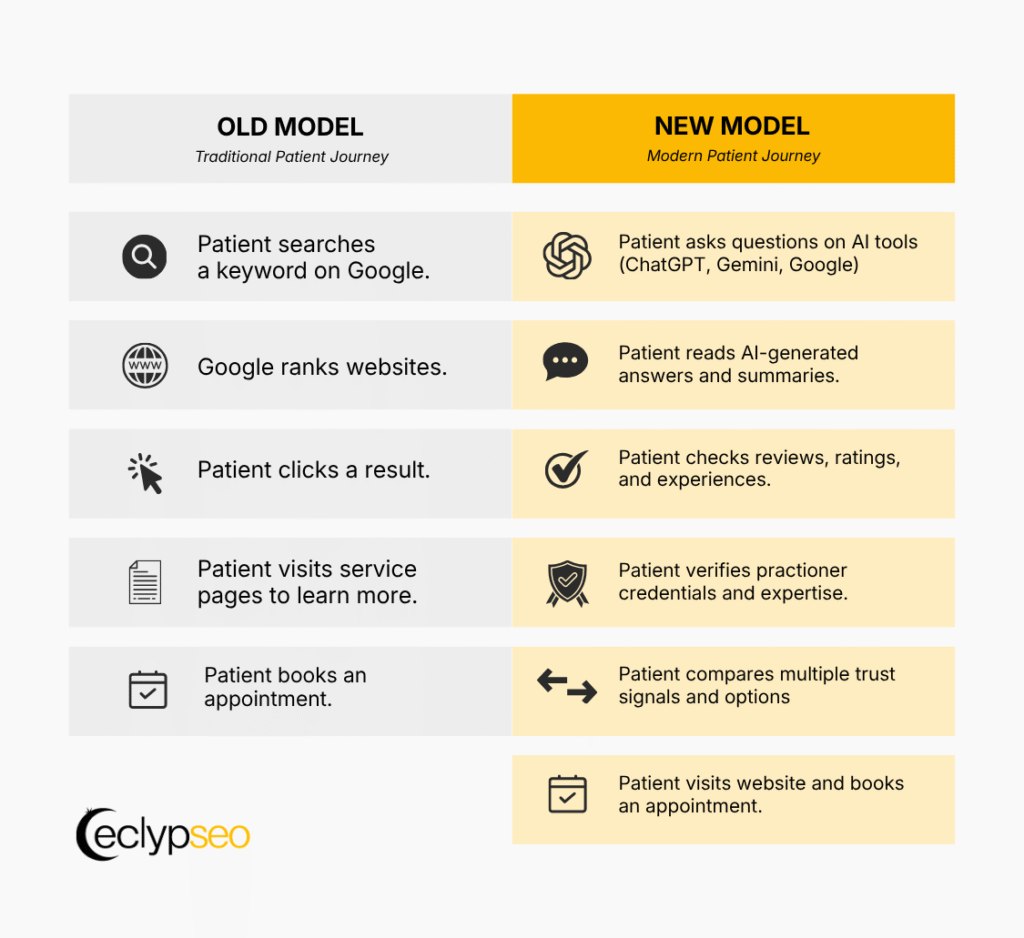
The difference is significant. Before, ranking well on Google was often enough to get noticed. If a clinic appeared near the top of search results, patients were more likely to click through, compare services and book an appointment.
Now, the journey is less direct.
Patients may see a clinic mentioned in an AI-generated answer, read reviews, check a doctor’s profile, compare credentials and look at third-party sources before they ever visit the clinic’s website.
Bain & Company found that 80% of consumers rely on AI-generated summaries for at least 40% of their searches, while organic website traffic has already declined by an estimated 15–25%.
By that point, they may already have formed an opinion. That is the hidden risk. If a clinic is only focused on its website rankings, it may miss the earlier moments where patients are already researching, comparing and shortlisting providers.
Why Traditional Healthcare SEO Is No Longer Enough
SEO is not disappearing. If you run or market a clinic in Dubai, the basics still matter:
- keyword research
- technical SEO
- local SEO
- Google Business Profile optimisation
- helpful healthcare content
- reputable backlinks
These are still important. But they are no longer the full picture.
Patients are not only looking at traditional Google results anymore. They are using AI tools, reading reviews, checking doctor profiles and comparing information from different sources before they decide who to trust.
That means ranking well is still valuable, but it is not always enough. Your clinic also needs to be visible in the places where patients are now researching and asking questions. This is where Generative Engine Optimisation, or GEO, comes in.
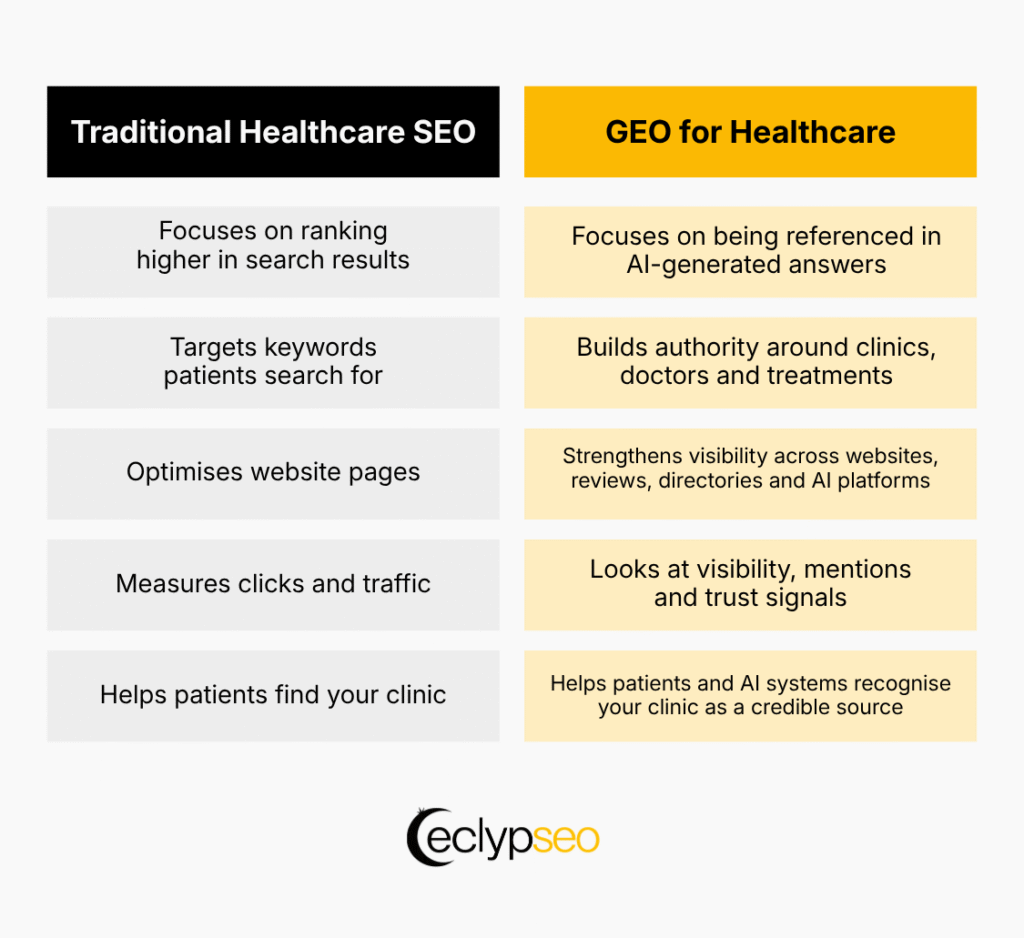
Traditional SEO asks:
How do we rank higher?
GEO asks:
How do we become a source that search engines and AI systems trust enough to reference?
That difference matters.
For Dubai clinics, the goal is no longer just to appear in search results. The goal is to become a credible source patients can find, compare and trust throughout their decision-making journey.
The Rise of Zero-Click Healthcare Searches
Another major shift is the rise of zero-click searches. A zero-click search happens when someone gets the answer they need directly in the search results, without clicking through to a website.
Google’s AI Overviews are making this more common.
A 2025 Pew Research Center study found that users clicked on traditional search result links in only 8% of visits when an AI summary appeared, compared with 15% of visits when no AI summary was present.
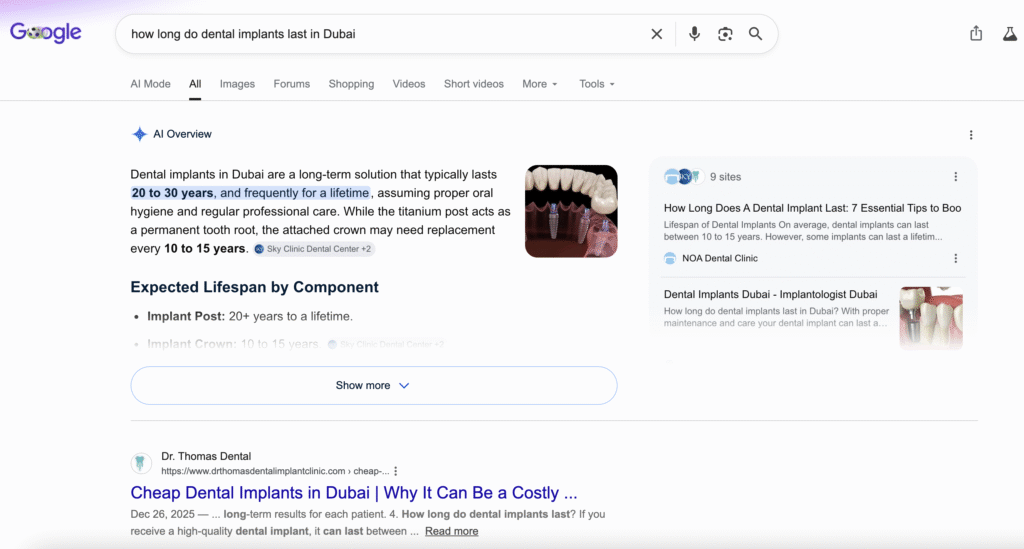
information directly in search results before visiting a clinic website.
For healthcare-related searches, patients may now see:
- symptom explanations
- treatment comparisons
- recovery information
- answers to common medical questions
- provider suggestions
directly within the search experience. This does not mean clinic websites are no longer important.
They absolutely still are.
Healthcare decisions are personal, sensitive and often high-consideration. Most patients will still visit a clinic website before booking an appointment. But the website may no longer be the first place they form an opinion.
That first impression might happen in an AI-generated answer, a review summary, a Google Business Profile, a doctor profile or a healthcare directory. For clinics, this creates a new challenge. It is not enough to only ask, “Are we ranking?” You also need to ask, “Are we showing up in the places patients are using before they reach our website?”
How Patients Search for Healthcare Services in 2026
Before choosing a clinic, patients now spend more time researching their options. They want to understand the treatment, compare providers, check practitioner credibility and feel confident that they are making the right decision. Increasingly, AI-powered tools are becoming part of that research process. This matters because search behaviour is changing just as quickly as search technology itself.
Patients Are Asking More Specific Questions
Searches are becoming longer, more detailed and more intent-driven. Search behaviour is becoming more detailed and conversational. Google has reported that AI-powered search experiences are encouraging people to ask questions that are longer and more complex than traditional keyword searches.
Instead of searching for:
“Dermatologist Dubai”
a patient may ask:
“Which dermatologist in Dubai specialises in hormonal acne treatment?”
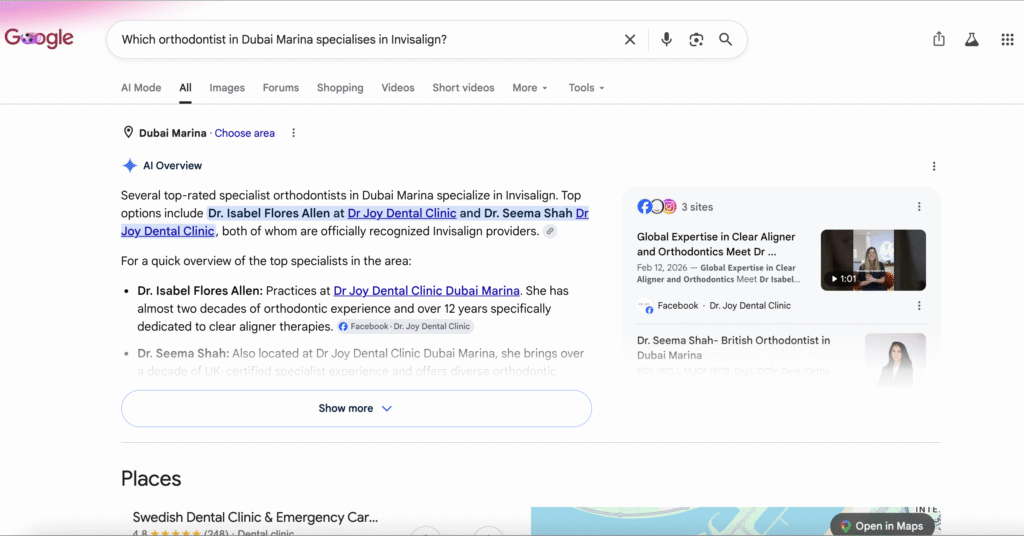
Instead of:
“Orthodontist Dubai”
they may search:
“Which orthodontist in Dubai Marina specialises in Invisalign?”
Or instead of:
“Hair transplant Dubai”
they may ask:
“Which clinic in Dubai has the best reviews for hair transplant procedures?”
These searches reveal something important. Patients are looking for expertise, reassurance and confidence before making a decision. Healthcare providers that answer these questions directly are often better positioned to earn visibility during the research process.
The Research Phase Is Becoming Longer
Healthcare decisions are rarely impulsive. This is especially true for:
- cosmetic procedures
- orthodontics
- fertility treatments
- bariatric surgery
- dermatology treatments
- other elective procedures
Many patients spend days or even weeks researching before making contact. A typical journey may look something like this:
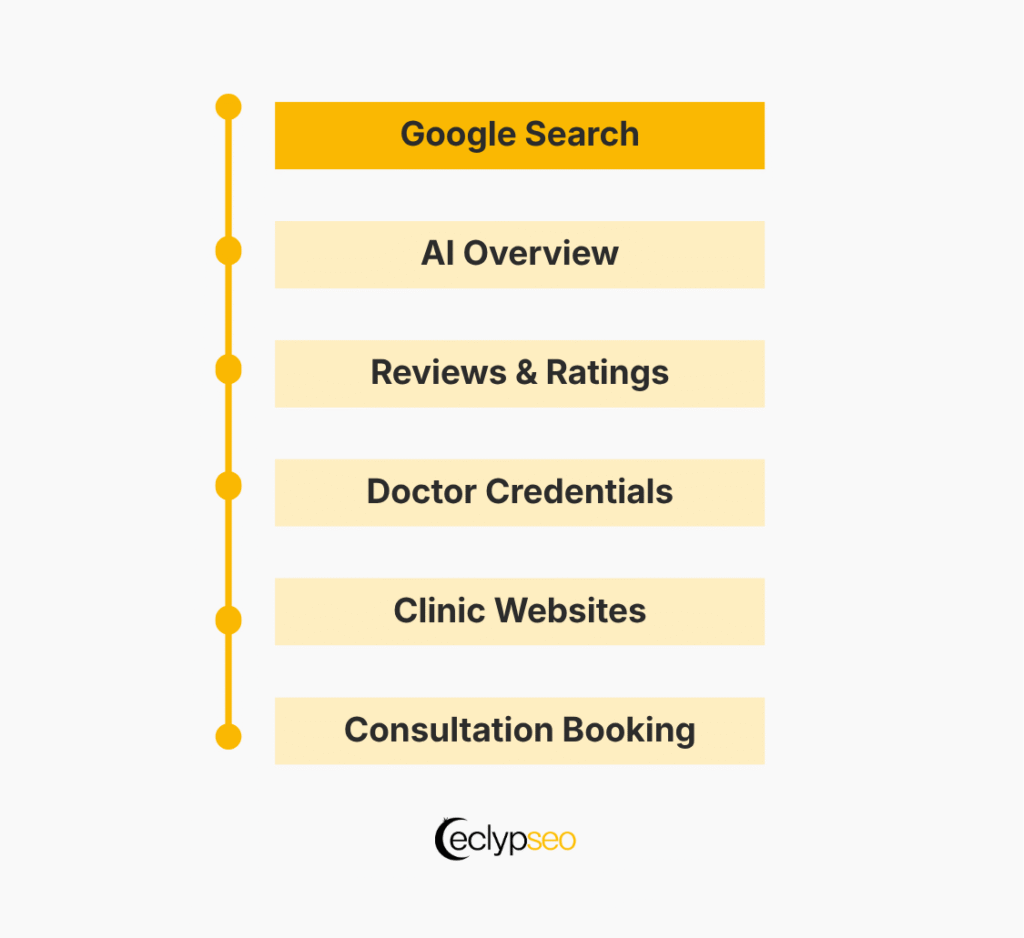
The exact path varies from patient to patient, but the overall trend is clear. Patients are consulting more sources before making healthcare decisions.
Reviews Play a Bigger Role Than Ever
Reviews have always been important. Today, they influence far more than local search visibility. Patients use reviews to evaluate the quality of care they can expect, while search engines and AI systems increasingly use review signals to better understand healthcare providers.
Common themes found in reviews may include:
- quality of care
- bedside manner
- wait times
- specialist expertise
- facility standards
- treatment outcomes
Strong review profiles help build confidence, both for prospective patients and for the platforms helping them discover healthcare providers. As patients continue to research more thoroughly before booking appointments, reviews are likely to remain one of the most influential trust signals in healthcare marketing.
AI Overviews and Their Impact on Dubai Clinics
One of the biggest changes in search over the past year has been the rollout of Google’s AI Overviews. Instead of simply displaying a list of websites, Google can now generate answers directly within search results by pulling information from multiple sources. For patients, this means faster access to information. For clinics, it changes how healthcare visibility works.
The Research Journey Is Starting Earlier
Consider a patient researching dental implants, fertility treatment or LASIK surgery. A few years ago, they would likely click several websites, compare providers and conduct their own research. Today, they may begin by asking questions such as:
- How long do dental implants last?
- What are the success rates of IVF treatment?
- Is LASIK safe after age 40?
- What should I expect during hair transplant recovery?
In many cases, Google can now provide an AI-generated summary before the patient visits a single website. That information often shapes the patient’s understanding of the treatment before they begin comparing clinics.
Why This Matters for Dubai Clinics
Healthcare decisions are rarely made after a single search. Patients often spend days or weeks researching before booking an appointment, particularly for higher-value treatments such as:
- fertility treatment
- cosmetic dermatology
- orthodontics
- dental implants
- hair restoration
- LASIK surgery
If your clinic is absent during the early research stage, you may be missing opportunities to influence patient decisions before provider comparisons even begin. This is one reason AI visibility is becoming increasingly important.
Visibility Is No Longer Limited to Rankings
Historically, healthcare SEO focused on improving rankings. The logic was straightforward:
Higher rankings = more clicks.
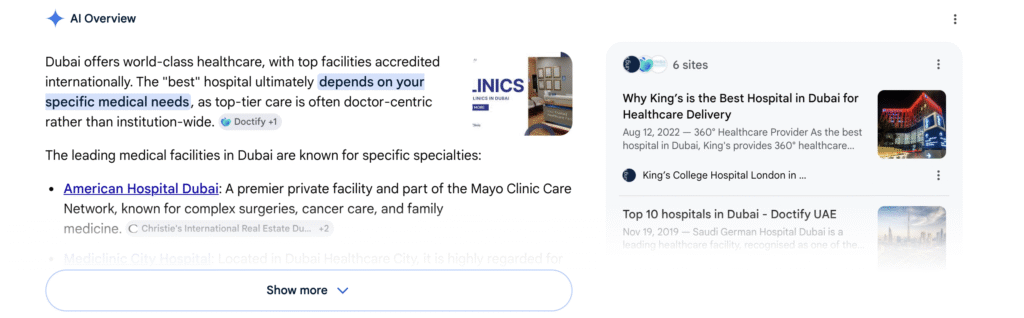
While rankings still matter, AI Overviews introduce a new layer of visibility. A clinic may be referenced within an AI-generated answer, even when it is not the highest-ranking result. At the same time, a page ranking in the top positions may receive fewer clicks if users find enough information directly within the search experience.
This doesn’t mean website traffic disappears. It means visibility is expanding beyond traditional rankings.
What Should Clinics Focus On?
While there is no guaranteed way to appear in AI Overviews, clinics can improve their chances by publishing content that demonstrates genuine expertise and answers patient questions clearly.
This includes:
- detailed treatment pages
- practitioner-led content
- educational resources
- accurate medical information
- strong review signals
- clear evidence of clinical expertise
The clinics most likely to benefit are often those already investing in patient education and long-term authority building. Ranking on Google still matters, but it’s not the whole game anymore. Clinics need to show up as trusted, credible sources across search results, AI answers, reviews and doctor profiles.
What Is GEO (Generative Engine Optimisation)?
Generative Engine Optimisation, or GEO, is the process of improving how visible a brand is within AI-generated answers. Traditional SEO focuses on helping webpages rank in search results.
GEO focuses on helping clinics become sources that AI systems are confident enough to reference. For healthcare providers, this distinction matters.
Patients are increasingly using AI-generated answers during the research stage of their healthcare journey. They may ask about treatment options, recovery timelines, risks, costs, practitioner experience or clinic reputation before deciding who to contact.
For Dubai clinics, GEO is not a replacement for SEO.
It is an additional layer of visibility.
The clinics most likely to benefit are those that publish accurate, helpful healthcare content and demonstrate strong expertise across their website, practitioner profiles, reviews and third-party mentions.
How GEO Works for Healthcare Brands
GEO is often described as the next evolution of SEO, but the underlying goal is slightly different. Traditional SEO focuses on helping a page rank for a keyword.
GEO focuses on helping search engines and AI systems understand who your clinic is, what it specialises in and whether it can be trusted as a source of information.
For healthcare providers, this is particularly important because AI systems must be confident that the information they surface comes from credible sources.
The Shift from Keywords to Entities
Historically, SEO revolved around keywords. A clinic might try to rank for terms such as:
- Dentist Dubai
- Fertility Clinic Dubai
- Orthodontist Dubai
- Dermatologist Dubai
Today, search engines are becoming increasingly entity-driven.
Instead of asking:
“Which page best matches this keyword?”
they are increasingly asking:
“Which provider is best known for this topic?”
That is a very different evaluation. Search engines want to understand:
- who your clinic is
- which doctors work there
- what treatments they specialise in
- whether patients trust them
- whether reputable sources mention them
A Real-World Example
Imagine a patient asks:
“Which fertility clinics in Dubai are known for IVF treatment?”
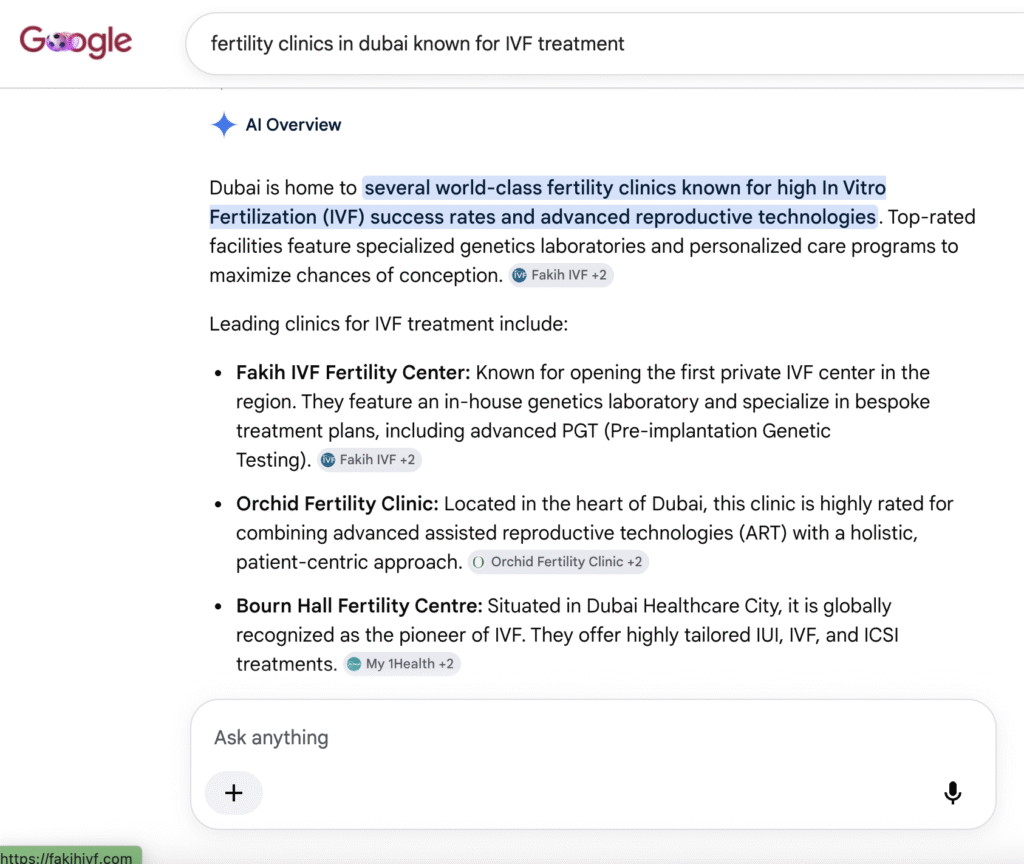
Search engines and AI systems are unlikely to rely on a single webpage to answer that question. Instead, they may evaluate a combination of signals, including:
- clinic expertise
- doctor profiles
- patient reviews
- healthcare directories
- media mentions
- professional associations
- educational content
The stronger and more consistent those signals are, the easier it becomes for search engines to understand what a clinic is known for.
What This Means for Clinics
The clinics most likely to succeed in AI-driven search are not necessarily those publishing the most content. They are often the clinics that have built the strongest digital presence around their expertise.
That includes maintaining accurate information across review platforms, directories, practitioner profiles, healthcare websites and other trusted sources. The goal is not simply to rank for a keyword.
The goal is to make it easy for search engines, AI systems and patients to recognise what your clinic is known for and why it can be trusted.
Why E-E-A-T Has Become a Competitive Advantage
In healthcare, credibility has always mattered. The difference today is that search engines and AI systems are becoming much better at evaluating it.
Google refers to this framework as E-E-A-T:
- Experience
- Expertise
- Authoritativeness
- Trustworthiness
While E-E-A-T is important across many industries, it carries even greater weight in healthcare because medical information can directly impact a person’s wellbeing and decision-making.
What Does Strong E-E-A-T Look Like for a Clinic?
For healthcare providers, E-E-A-T goes beyond publishing content. It involves demonstrating that the information on your website comes from qualified professionals and reflects genuine clinical expertise.
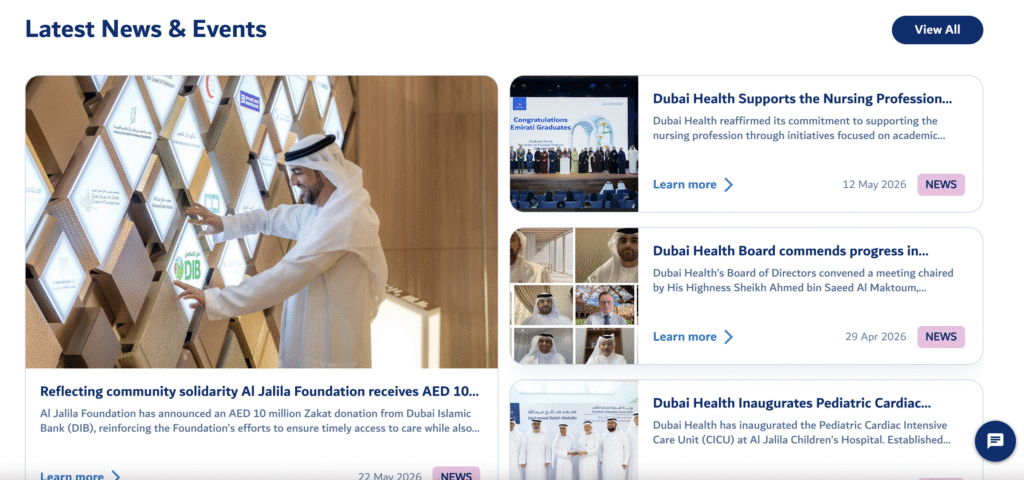
Image Source: Dubai Health
Common signals include:
- detailed practitioner profiles
- medical qualifications and certifications
- evidence of clinical experience
- practitioner-led content
- transparent clinic information
- positive patient reviews
- mentions from trusted healthcare sources
These signals help both patients and search engines understand who is behind the information and why it can be trusted.
Why It Matters More in Healthcare
Patients are often making significant decisions when searching for healthcare services. They may be comparing treatment options, evaluating specialists or researching procedures that involve considerable financial and personal investment. As a result, search engines apply a higher level of scrutiny to healthcare content than they would for many other industries. Clinics that clearly demonstrate expertise and credibility are often better positioned to build visibility over the long term.
E-E-A-T Is Not a One-Time Task
Strong E-E-A-T is built over time. It develops through consistent patient experiences, expert-led content, recognised credentials and a trustworthy online presence. For Dubai clinics, investing in E-E-A-T is not just about improving search visibility. It is about building the credibility that patients expect before making important healthcare decisions.
Local SEO Still Drives Patient Acquisition
While AI search visibility and GEO are changing how patients discover healthcare providers, local SEO remains one of the most important drivers of patient acquisition. Most healthcare decisions still have a strong local component. Patients are typically looking for providers within a specific area, whether that’s Dubai Marina, Jumeirah, Downtown Dubai, Al Barsha or another nearby location.
When someone searches for:
- dentist near me
- fertility clinic in Dubai Marina
- orthodontist in Jumeirah
- dermatologist near Downtown Dubai
Local search signals continue to play a major role in determining visibility.
The Local Signals That Still Matter
While AI search visibility and GEO are changing how patients discover healthcare providers, local SEO remains one of the most important drivers of patient acquisition. Most healthcare decisions still have a strong local component. Patients are typically looking for providers within a specific area, whether that’s Dubai Marina, Jumeirah, Downtown Dubai, Al Barsha or another nearby location.
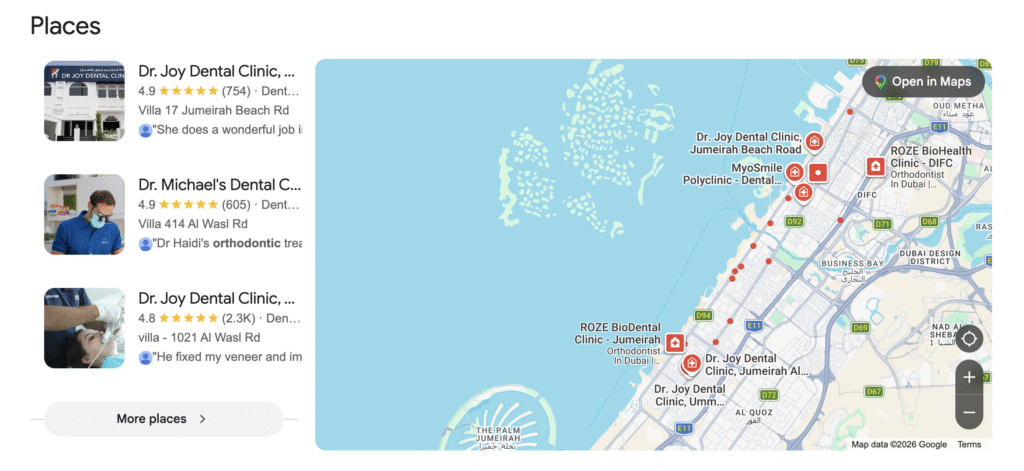
When someone searches for:
- dentist near me
- fertility clinic in Dubai Marina
- orthodontist in Jumeirah
- dermatologist near Downtown Dubai
Local search signals continue to play a major role in determining visibility.
The Local Signals That Still Matter
For healthcare providers, some of the most important local SEO factors include:
- an optimised Google Business Profile
- accurate business information
- consistent citations across directories
- patient reviews
- location-specific service pages
- local backlinks and mentions
These signals help search engines understand where a clinic operates and which services it provides.
AI Search Doesn’t Replace Local SEO
One common misconception is that AI search will replace local SEO. In reality, the two are becoming increasingly connected. Many AI-generated answers still rely on local business information, reviews, reputation signals and other data sources that have long been part of local SEO. For clinics, this means the fundamentals remain important. The providers most likely to succeed are often those that combine strong local visibility with credible expertise and authority across the wider web.
What Dubai Clinics Should Prioritise Next
Search is evolving, but the objective remains the same: helping patients find and trust your clinic. The difference is that visibility now depends on more than rankings alone. For healthcare providers looking to strengthen their position in both traditional and AI-driven search, there are several areas worth prioritising.
1. Invest in Practitioner Visibility
Patients often research doctors before they research clinics. Make it easy for search engines and patients to understand who your practitioners are, what they specialise in and what experience they bring.
This may include:
- detailed practitioner profiles
- qualifications and certifications
- areas of expertise
- practitioner-led content
- speaking engagements, publications or industry recognition
2. Create Content That Answers Real Patient Questions
Many healthcare searches now begin with questions rather than keywords. Content should address the concerns patients actually have, including:
- treatment options
- recovery timelines
- risks and side effects
- costs and expectations
- eligibility and suitability
The more useful and informative the content is, the more opportunities there are to earn visibility throughout the research journey.
3. Strengthen Your Review Strategy
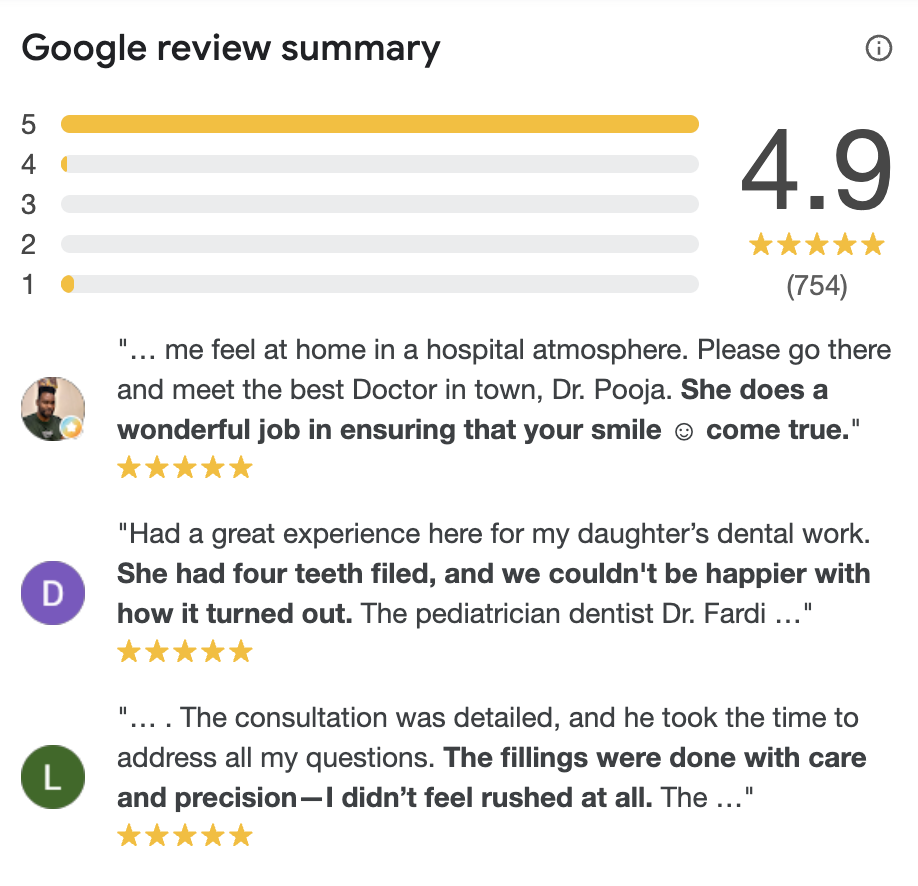
Reviews influence both patient decisions and online visibility. Encouraging genuine patient feedback and responding professionally to reviews can help strengthen credibility over time. Consistency matters more than volume alone.
4. Build Authority Beyond Your Website
Search engines and AI systems increasingly look beyond a clinic’s website when evaluating credibility. Healthcare directories, professional associations, media mentions, practitioner profiles and industry publications all contribute to a stronger digital presence.
5. Continue Investing in Local SEO
AI search is changing how patients discover information, but local intent remains strong. Maintaining an optimised Google Business Profile, accurate business information and location-specific content continues to play an important role in patient acquisition.
Looking Ahead
The clinics most likely to succeed over the coming years will not necessarily be those chasing every new search trend. They will be the providers that consistently demonstrate expertise, credibility and patient value across every stage of the decision-making journey.
What Clinics Should Do Next
Dubai clinics should not treat SEO as a rankings exercise alone. The next priority is to build trust across every place patients research: Google, AI answers, reviews, doctor profiles and third-party platforms.
That means creating clearer patient education, strengthening practitioner profiles, earning better review signals and making sure the clinic is consistently presented as a credible healthcare source. The clinics that do this now will be easier for patients to find, compare and trust.