
When someone wants to find a fashion store in Dubai today, they don’t always start with Google. They might ask an AI chatbot, watch a TikTok video about someone’s shopping haul, or read a Reddit thread, all before landing on any store’s website.
And this is becoming normal, not rare.
The fashion market in the UAE is expected to grow from around US$23.5 billion to US$31.2 billion by 2030. More shoppers, more competition, and a whole new way of being discovered.
What’s new is what happens before shoppers even visit a store’s website. They’re forming opinions through AI-powered answers, online reviews, and social media posts first. This article breaks down what’s driving this change, what it means for Dubai fashion stores, and where shops should focus their efforts in 2026.
The Visibility Gap Most Fashion Stores in Dubai Miss
Ranking high on Google still matters. But a store can rank well and still lose a potential customer before they ever click.
Think about how someone actually shops for sustainable fashion in Dubai today. They might start with an AI-generated answer that lists what’s available, or they might check Google reviews to skip stores with bad service.
The real risk for Dubai fashion stores is not that Google search is dying. It’s that getting found now happens across many more places than just Google results.
That makes the gap between “showing up on Google” and “actually being seen by shoppers” bigger than ever.
Why Old-School Fashion SEO Is Not Enough Anymore
The old SEO rulebook for fashion stores followed a simple plan:
- Make your product pages look great to Google.
- Build a tidy website structure with clear categories.
- Get fashion magazines and blogs to link to you.
- Keep your Google Business Profile updated.
- Target the keywords your shoppers are searching for.
That plan still works. But it only covers part of where shoppers are looking now. Technical SEO, local search signals, and good backlinks are still the foundation. So without them, everything else gets harder.
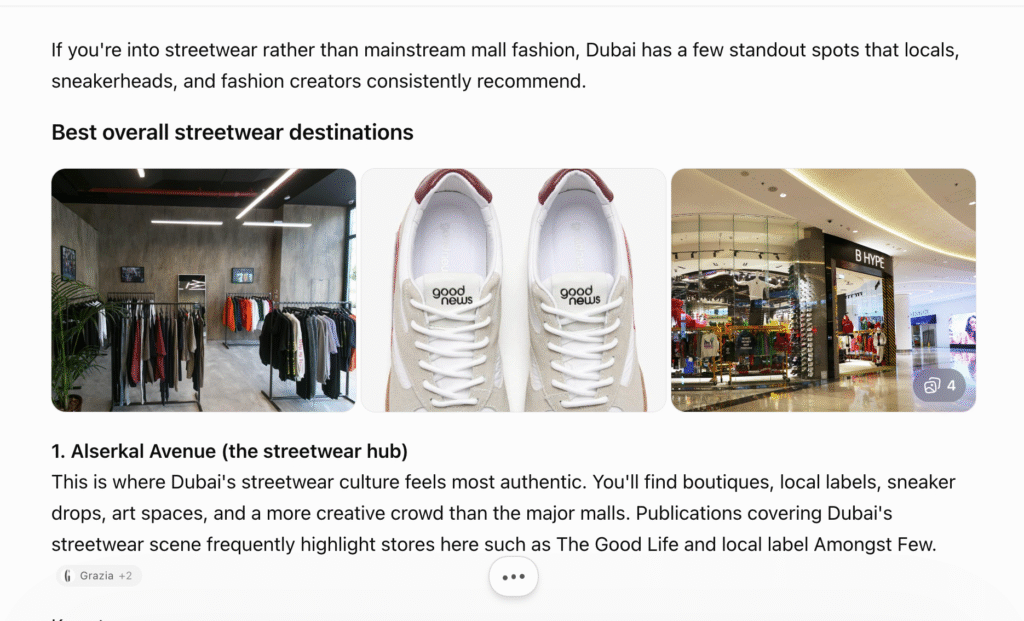
But shoppers are also discovering stores in new places that this old plan doesn’t reach:
- Google AI Overviews – Google now shows AI-written answers at the very top of search results, listing stores before anyone even clicks a link.
- ChatGPT and Perplexity – More shoppers are using AI tools to ask things like “where’s the best place to buy streetwear in Dubai?” and getting answers straight away.
- Instagram and TikTok – These are now where fashion discovery actually begins. 52% of global fashion shoppers use Instagram and 28% use TikTok to find new stores and styles.
- Reddit – Honest, real-person recommendations on Reddit are increasingly showing up in search results and AI answers.
- Review platforms – Shoppers check reviews to decide if a store they’ve heard about is actually worth visiting.
A solid technical SEO foundation is still a must. But it’s no longer enough on its own if you want shoppers to find you at every stage of their journey.
Why Some Shoppers Never Visit Your Website
More and more often, shoppers get the answer they need. A recommendation, a list of stores, or a buying guide, without ever clicking through to any store’s website.
This is called a “zero-click search.”
For fashion stores in Dubai, the searches most affected are the ones shoppers use when they’re actively looking to buy:
- “Best luxury fashion stores in Dubai”
- “Where can I buy modest fashion in Dubai?”
- “Best sneaker stores in Dubai”
- “Top fashion boutiques near Dubai Marina”
Google’s AI can now respond to these questions with its own curated shortlist, before any store’s website appears. Many shoppers see that list and act on it. This doesn’t mean websites don’t matter. Fashion is a thoughtful purchase. Shoppers still want to browse products, check availability, and get a feel for a brand.
But your website might not be where that first impression happens anymore. A store that isn’t showing up in the places AI tools pull information from may not make it onto that shortlist, even if it ranks well on traditional Google.
How Dubai Fashion Shoppers Search in 2026
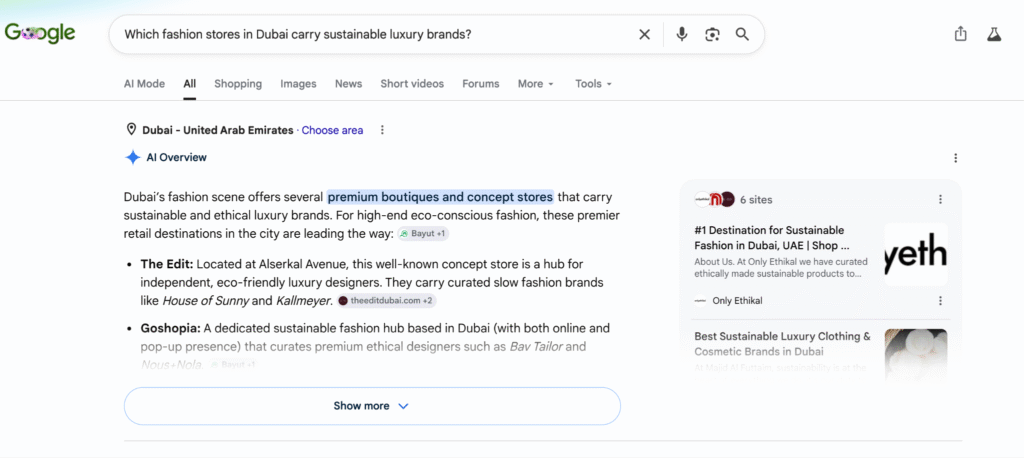
Shoppers Are Asking Much More Specific Questions
People don’t just type “fashion stores Dubai” anymore. They ask detailed questions that show they already know what they want:
- Old search: “Fashion stores Dubai” → New search: “Which fashion stores in Dubai carry sustainable luxury brands?”
- Old search: “Streetwear Dubai” → New search: “Where can I find limited-edition sneakers in Dubai?”
- Old search: “Designer boutiques Dubai” → New search: “Which boutiques in Dubai specialise in emerging European designers?”
These detailed questions show real buying intent.
They also reward stores that have written helpful, specific content, because that’s what AI tools and search engines feel confident pointing people to.
Shoppers Take More Steps Before Buying
Fashion purchases (especially anything mid-range to luxury) rarely happen after one search. A typical shopper journey in 2026 looks something like this:
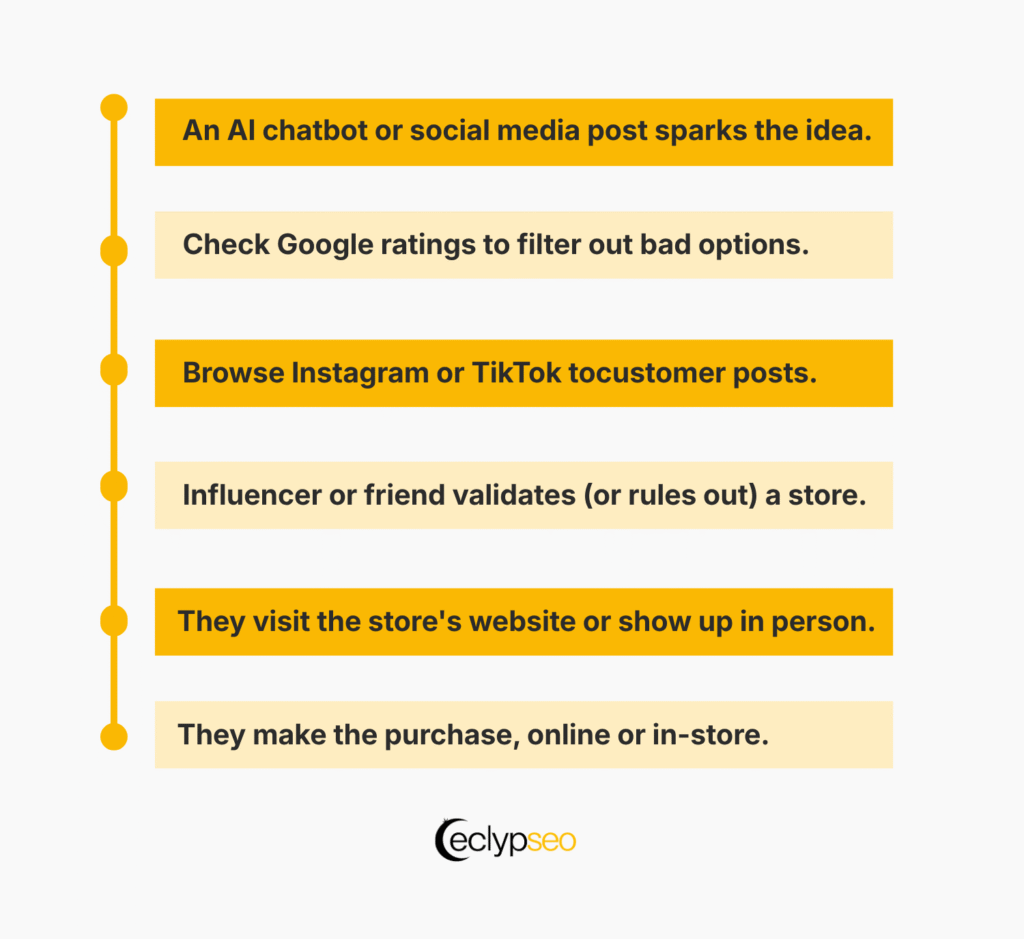
- An AI chatbot or social media post sparks the idea.
- They check Google ratings and reviews to filter out bad options.
- They browse Instagram or TikTok to see the store’s vibe and real customer posts.
- An influencer or friend validates (or rules out) a store.
- They visit the store’s website or show up in person.
- They make the purchase, online or in-store.
Stores that only show up at step 5 (the website) are getting into the conversation very late.
Stores that are present at steps 1 and 2, in AI answers, review platforms, and social content have a much better chance of making the shortlist early.
Reviews and What Other People Say Matter More Than Ever
Reviews have always helped. But in 2026, they do two jobs at once: they build trust with shoppers and they signal to AI systems that a store is worth recommending.
A store with lots of fresh, honest reviews is easier for an AI tool to confidently mention than one with no reviews or old ones.
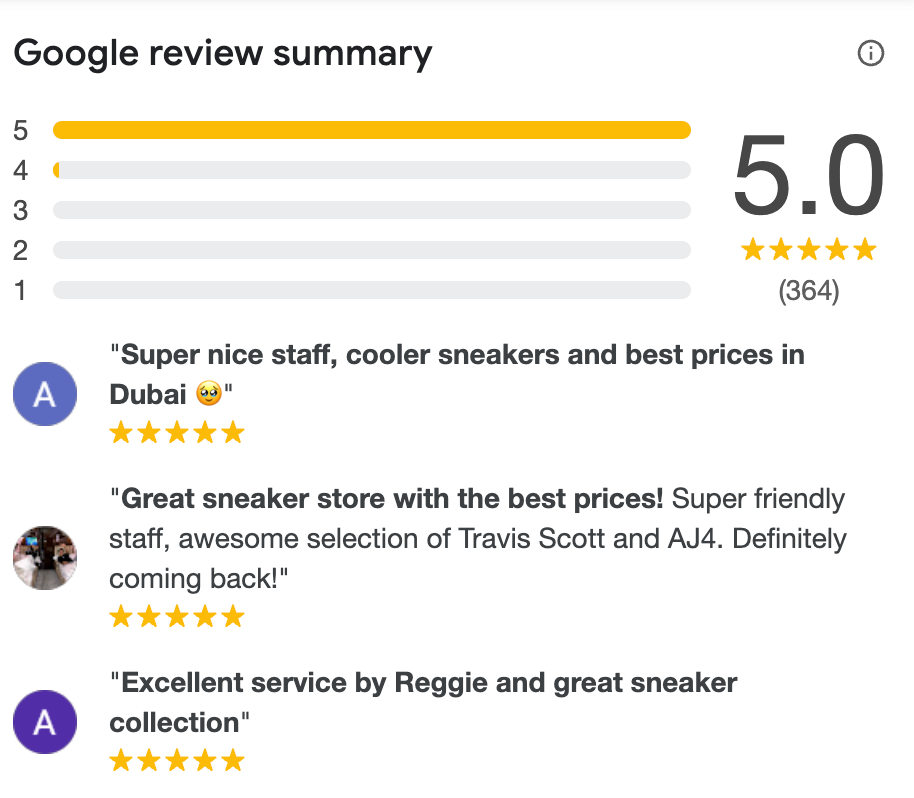
The signals that matter most right now:
- Google/ Trustpilot Reviews – for showing up in local search
- Customer photos and posts on social media – for authenticity
- Influencer mentions – for aspiration and reach
- Consistent customer testimonials – for ongoing trust
Together, these build a picture of your store’s reputation that AI tools use to decide whether to recommend you.
The numbers back this up: 78% of shoppers say social content influences their fashion purchases, and 82% use social media to discover and research products before buying.
For fashion, a category built on trust, taste, and peer approval, that’s a huge chunk of your potential customers.
It’s also worth noting that how well your store collects and displays these signals often depends on the platform it’s built on Shopify, WordPress, Wix, Squarespace, or Salla for GCC-focused retailers.
The platform affects how visible those trust signals are to Google and AI systems.
Google AI Overviews and What They Mean for Your Store
Google’s AI Overviews have changed what search results actually look like for fashion searches. Instead of just showing a list of links, Google now generates its own written answer, and places it right at the top, above everything else.
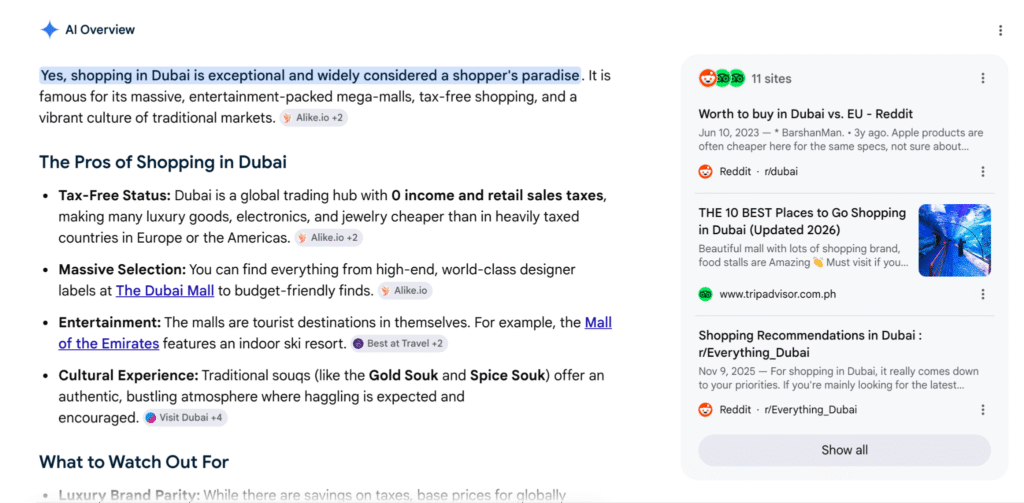
For shoppers, this makes research faster. For stores, it creates a new way to get seen, one that works separately from traditional rankings.
Your store doesn’t need to be ranked number one to appear in an AI Overview.
But it does need to be the kind of store that Google trusts enough to mention.
That means being:
- Accurate and consistent across all your online profiles
- Well-represented on multiple platforms, and not just your own website
- Described in ways that match what shoppers are actually searching for
Fashion stores in Dubai take this into account because the “research phase” of a shopper’s journey can now be shaped entirely before they visit any individual website.
A boutique that appears in an AI answer for “best modest fashion stores in Dubai” has a head start over one that doesn’t, even if both rank the same in regular Google results.
What Is GEO (Generative Engine Optimisation)?
Think about how a shopper might ask ChatGPT or Perplexity.
“Where’s the best place to buy sustainable fashion in Dubai?” or “Which boutiques in Dubai Marina carry luxury streetwear?”
Those aren’t Google searches.
There’s no results page to rank on. The AI just picks an answer, and either your store is in it or it isn’t.
That’s the gap GEO is designed to close. It talks about building the kind of presence through reviews, mentions, consistent information and category authority.
This is where AI tools feel confident drawing from when a shopper asks a question your store should be answering.
Traditional SEO gets you found on Google.
But GEO gets you recommended everywhere else.
How GEO Works for Fashion Stores
AI search optimisation is less about tweaking individual pages and more about the overall picture your brand paints across the web. AI tools look at a mix of signals:
- Mentions in credible places – fashion publications, local lifestyle blogs, Dubai directories
- Review quality and recency – fresh, honest reviews on Google and other platforms
- Consistency – is your store described the same way everywhere online?
- Category focus – are you clearly known for something specific, like modest fashion, luxury streetwear, or sustainable brands?
- Third-party validation – editorial coverage, influencer shoutouts, references from trusted sources outside your own site
The stronger and more consistent these signals are, the more confidently AI tools can describe and recommend your store, both in direct answers and in Google AI Overviews.
Keywords Are Out. What You’re Known For Is In.
Search engines have been moving away from simple keyword matching for a while. With AI-powered search, that shift has accelerated.
Instead of “does this page contain the keyword?”, the question is now “which store is genuinely known for this?”
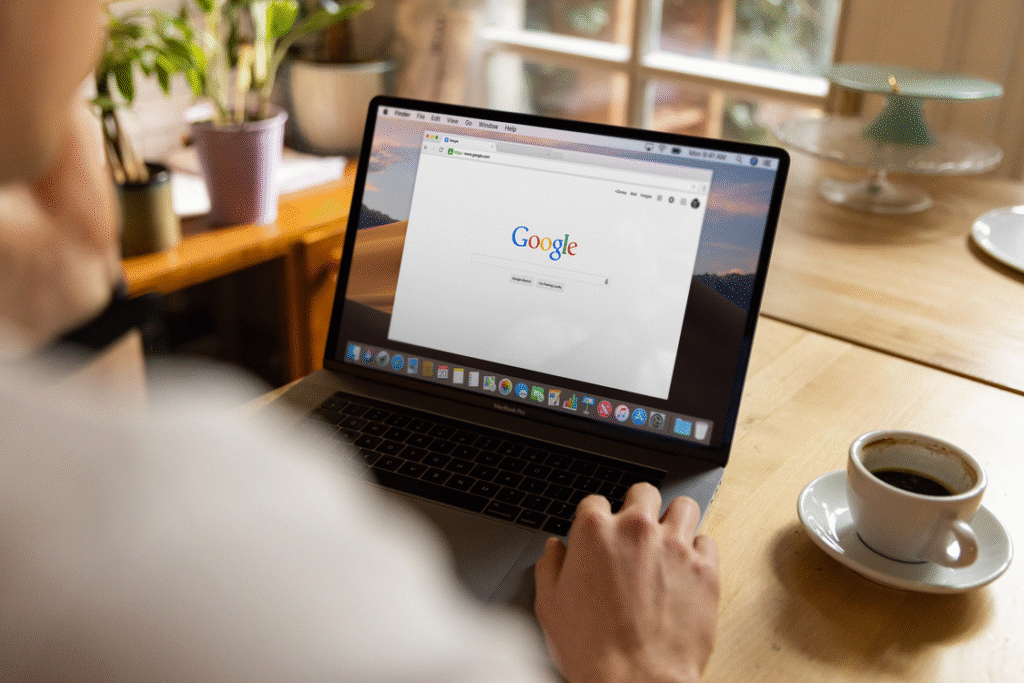
Search engines are now trying to understand brands, locations, and product types as connected ideas.
A boutique in Downtown Dubai that’s consistently described as a destination for emerging European designers is building a reputation that search engines can understand and act on.
That makes it easier for AI tools to recommend that store for relevant searches, even if the page isn’t perfectly optimised for a specific phrase.
For Dubai fashion stores, this is a big shift. It’s no longer just about targeting keywords on a page.
The broader your store’s digital footprint, the more places it’s accurately and consistently described, the better search engines understand who you are and who you serve.
How Your Website Structure Affects Search Visibility
Fashion ecommerce stores have a visibility challenge that most retailers don’t think about until it’s already costing them.
A single store can have hundreds (sometimes thousands) of product pages. Seasonal collections, size variants, colour options, filtered category pages. Without the right foundations, most of those pages will never get found by Google at all.
The most common issues:
- Duplicate content – product variants creating near-identical pages that confuse search engines and split your visibility
- Thin product pages – minimal descriptions that give Google nothing meaningful to work with
- Poor site structure – collections and categories buried too deep for search engines to prioritise
- Wasted crawl budget – search engines spending time on low-value filtered or paginated pages instead of your most important ones
The platform your store runs on plays a big role here. Shopify handles a lot of this well out of the box, but larger catalogues still need careful planning.
WordPress gives you more control but requires more deliberate setup. Wix, Squarespace and Salla each have their own behaviours worth understanding before you scale.
Getting this right is making sure the pages you’ve invested in actually get seen.
Why E-E-A-T Is Now a Competitive Advantage
Google’s E-E-A-T framework stands for Experience, Expertise, Authoritativeness, and Trustworthiness.
It was originally designed to assess the quality of content like health articles. But it’s now a useful way to think about how search engines judge any brand’s credibility, including fashion stores.
Here’s what E-E-A-T looks like in plain terms for a fashion retailer:
- Experience – Real customer reviews and genuine shopper photos. Not made-up endorsements.
- Expertise – Content that shows you genuinely know your niche. Whether that’s modest fashion, luxury authentication, sustainable sourcing, or sneaker culture.
- Authoritativeness – Getting mentioned or featured in credible fashion magazines, local lifestyle media, or industry directories.
- Trustworthiness – Accurate, consistent info across all platforms. A strong review profile. Clear, honest communication.
Dubai’s fashion market has over 1,200 multinational retailers competing alongside independent boutiques and local brands.
In that environment, E-E-A-T signals act as a differentiator. Stores that have built genuine credibility across these areas perform better in both traditional search and AI-generated recommendations, compared to stores that only focus on optimising their website pages.
Local SEO Still Drives People Into Your Store
For physical fashion stores, local search is still one of the most direct paths from being found online to getting a real person through the door.
Shoppers searching for stores near Dubai Mall, Mall of the Emirates, JBR, Downtown Dubai, City Walk, and Dubai Marina all have strong local intent, and local SEO signals still play a big role in who they find.

Dubai Mall’s Fashion Avenue alone had more than 111 million visitors in 2024.
It’s now ranked the 11th most expensive retail location in the world, with prime retail rents rising 9% year-on-year. With that level of foot traffic and competition, showing up in local search is commercially vital.
Remember, an accurate fully filled-out Google Business Profile, plus content that mentions the specific areas you serve, still influences local search rankings.
These same signals also feed into how AI tools describe stores in location-based searches. “Best fashion boutiques near Dubai Marina” is exactly the kind of query where local SEO and GEO work together.
AI search hasn’t replaced local intent, it’s extended it. A shopper asking an AI assistant for fashion recommendations near JBR is still expressing local intent.
The AI’s answer will still draw on local signals. Local SEO for retailers remains a foundation, and stores that maintain it well are better positioned across both traditional and AI-driven search.
What Fashion Stores Should Focus On Next
1. Get Your Store Seen Beyond Your Website
Your website is no longer the only place — or even the first place — where shoppers form opinions about your store. Building your presence across review platforms, fashion directories, local lifestyle publications, and social channels is now a core part of how search engines and AI tools understand who you are. The more consistently and accurately your store is described across these surfaces, the stronger your fashion SEO foundation become
2. Write Content That Answers Real Questions
Since shoppers are asking longer, more specific questions, there’s a real opportunity for stores to earn visibility by directly answering those questions. Content built around genuine buying intent is far more likely to get picked up by AI tools than generic product descriptions or keyword-stuffed category pages.
3. Social Proof for Your Fashion Store for SEO
Reviews work in two ways: they build trust with shoppers and they signal credibility to AI systems. A consistent, recent, and well-managed review profile across Google and other platforms gives AI tools more confidence to recommend your store. Respond to reviews professionally. Encourage happy customers to leave feedback. Keep your social channels active and genuine.
4. Start Taking AI Search Seriously
Understanding how AI search engines decide what to recommend is becoming a practical necessity for retailers who want to stay visible.
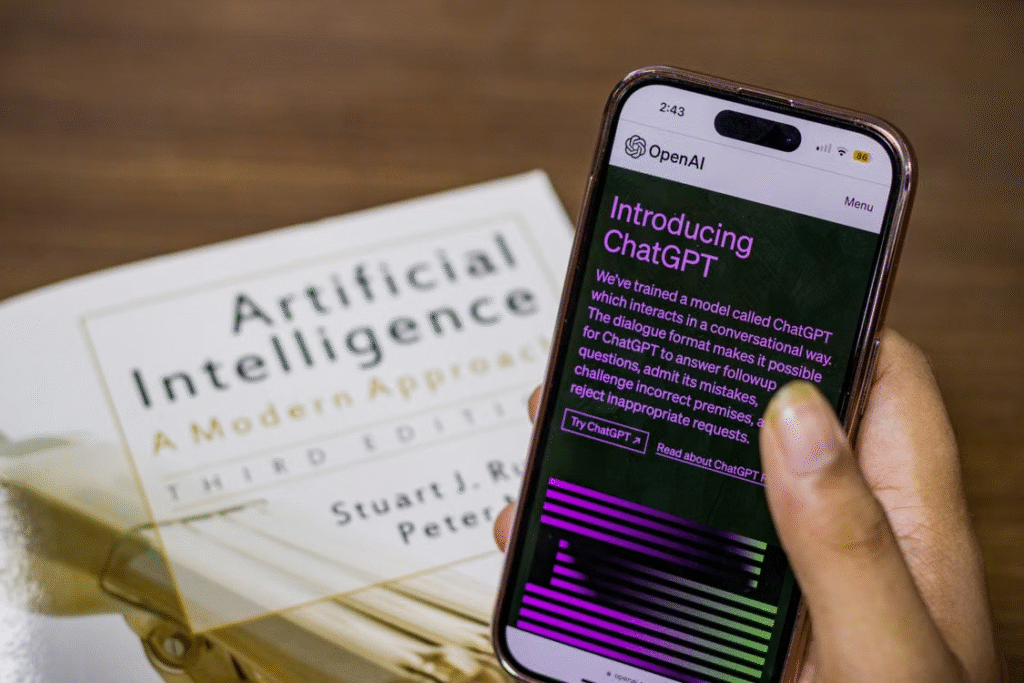
That means making sure your brand information is accurate and consistent everywhere, and building the kind of third-party recognition that AI tools use as a signal of credibility.
5. Keep Investing in Local SEO
The basics of local SEO for retailers are still directly relevant to getting people into your store. As AI search increasingly pulls in local signals to shape its recommendations, maintaining a strong local SEO foundation becomes more valuable, and not less.
What Should Fashion Retailers Do Right Now?
The shift in how Dubai’s fashion shoppers discover stores is real, steady, and speeding up. It reflects a bigger change in how people research, validate, and decide where to shop.
Stores that recognise this early have an advantage that grows over time. Those that wait often find the gap much harder to close. The smart move isn’t to drop fashion SEO in favour of chasing AI visibility. It’s to see them as two parts of the same strategy.
A strong technical and local SEO foundation feeds the brand recognition that AI tools rely on. Good content that answers real shopper questions earns both traditional search rankings and AI citations. A well-managed review profile builds shopper trust and AI confidence at the same time.
That kind of credibility takes time to build.
But once it’s established, it’s also very hard for anyone else to take away.